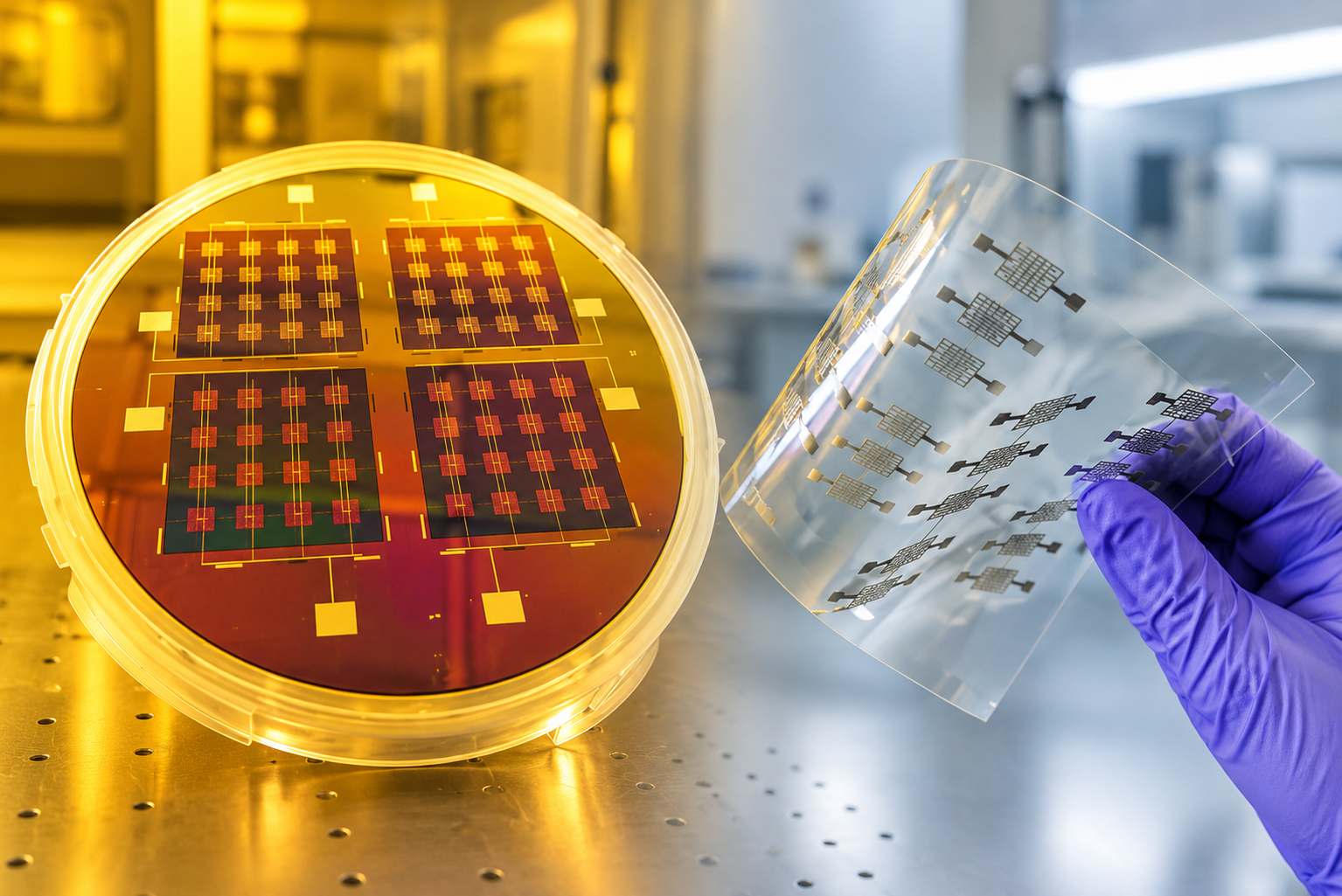
Micro-supercapacitor Devices
Our studies on supercapacitor are mainly focused on large area printing for high energy density with self-powering capability. We have developed spray coating method for printing supercapacitors on any surface with large number of integration. Light sensitive supercapacitors paved way to fabricate self-powered supercapacitors. We exploit dynamics of charge transport to improve efficiency of self-powered supercapacitors. Carbon materials are cheap and abundantly available source to be utilized largely on these applications, hence we focus to modify multidimensional allotropes of carbon. Through our research we have established novel paradigms in this field. We develop energy storage micro-devices that are compatible with the goal to miniaturized any electronic system with embedded micro-energy storage device. We have achieved an efficient system with high energy density at small scale device configuration. We explore to develop compact supercapacitors. We provide facility for both micro fabrication clean room facility and sophisticated measurements.
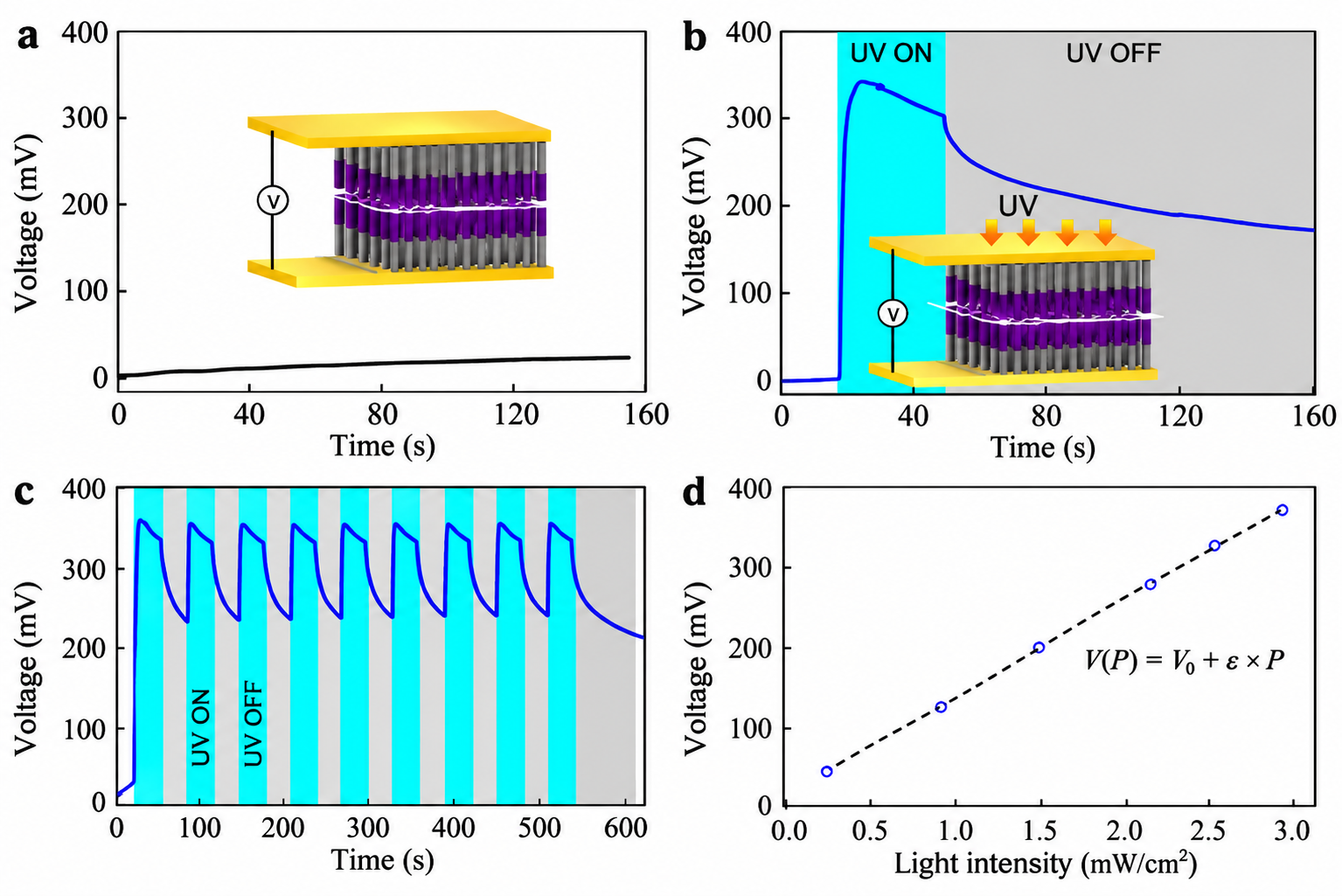
Voltage Generation in Optically Sensitive Supercapacitor for Enhanced Performance
Figure: (a) Voltage?time response of the SSC in absence of UV. (b) Self-generated voltage response of the SSC with respect to UV radiation. (c) Cyclic self-generated voltage response under periodically UV off and on states of the SSC. (d) Self-generated voltage response with respect to the UV radiation intensity.
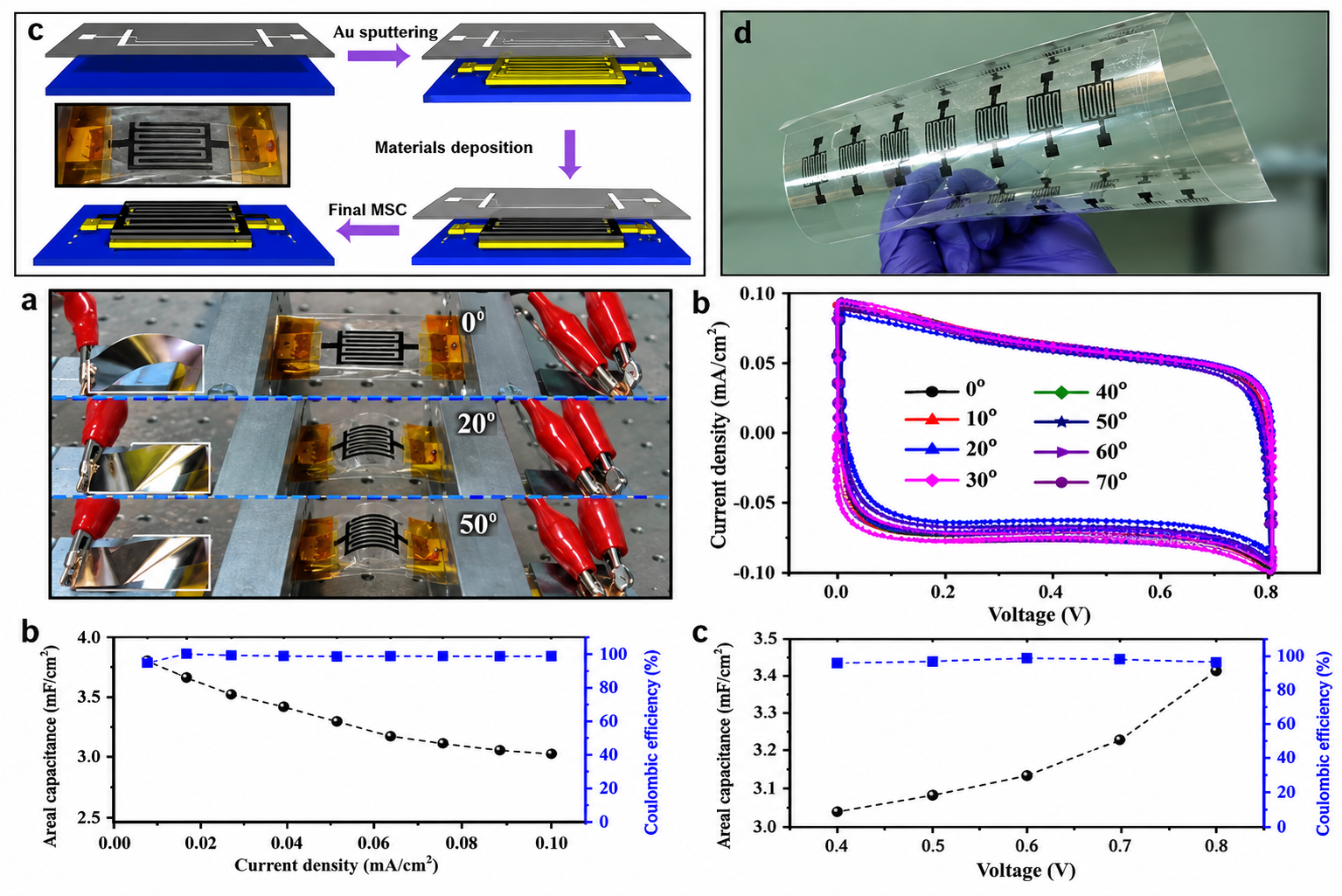
Flexible Array of Microsupercapacitor for Additive Energy Storage Performance Over a Large Area
Figure: fabrication steps involved in the MSC, and the inset shows the digital photograph of an MSC. Digital photographs of an MSC array on the flexible A4 PET sheet. Digital photographs of the LMSC at different bent angles (0?70°) and CV responses of the LMSC. the areal capacitance/Coulombic efficiency plots of the LMSC with respect to the current density (0.01?0.10 mA/cm2) and voltage (0.4?0.8 V).
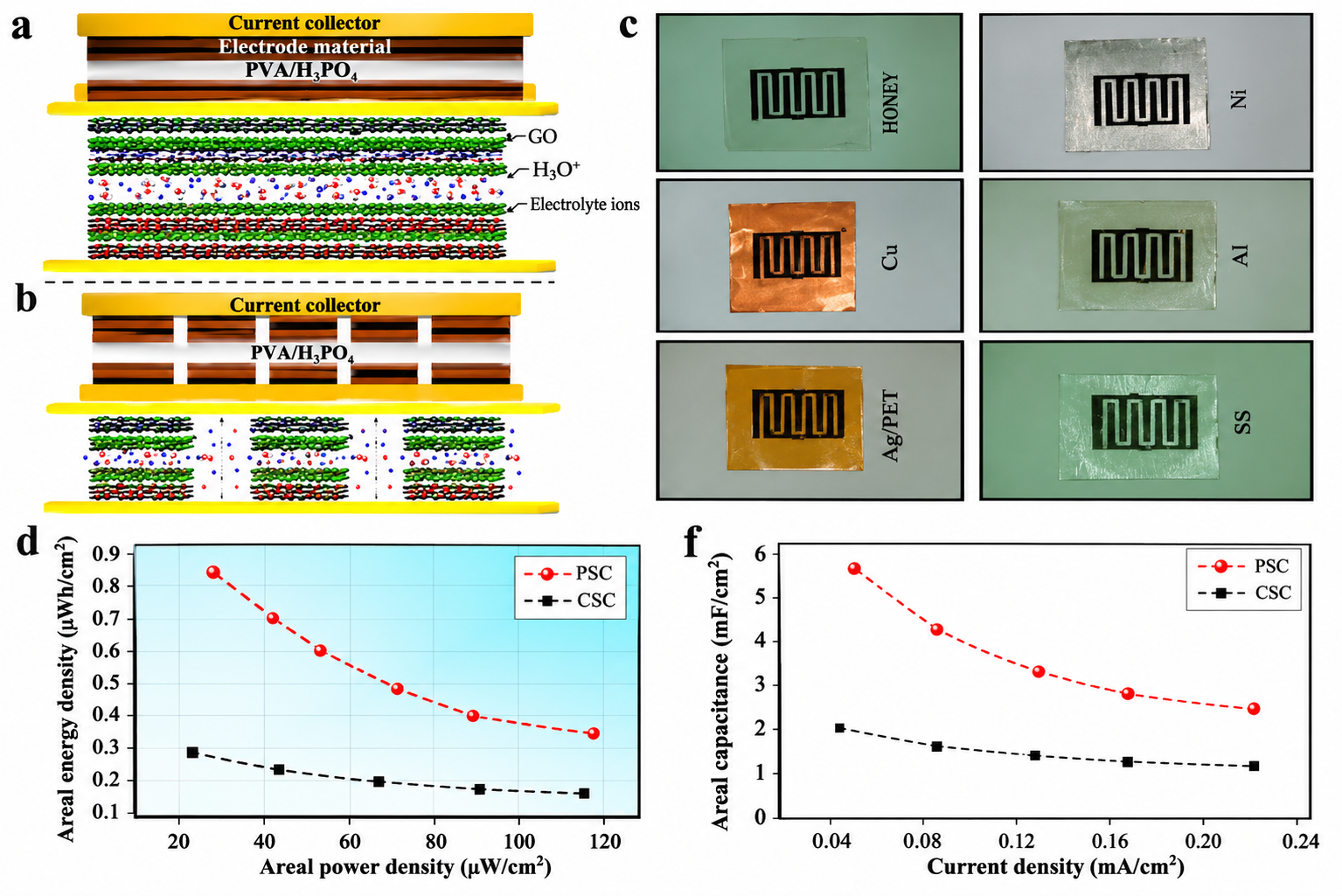
Layered Assembly of Reduced Graphene Oxide and Vanadium Oxide Heterostructure Supercapacitor Electrodes with Larger Surface Area for Efficient Energy-Storage Performance
Figure: (c) and (d) are the schematic diagrams of CSC and PSC, where the lower schematics represent the charge storage mechanisms under charging condition. Areal capacitance comparison plot with respect to the current density of the CSC and the PSC. PSC at different current densities. Comparison for Ragone plots of the CSC and the PSC.
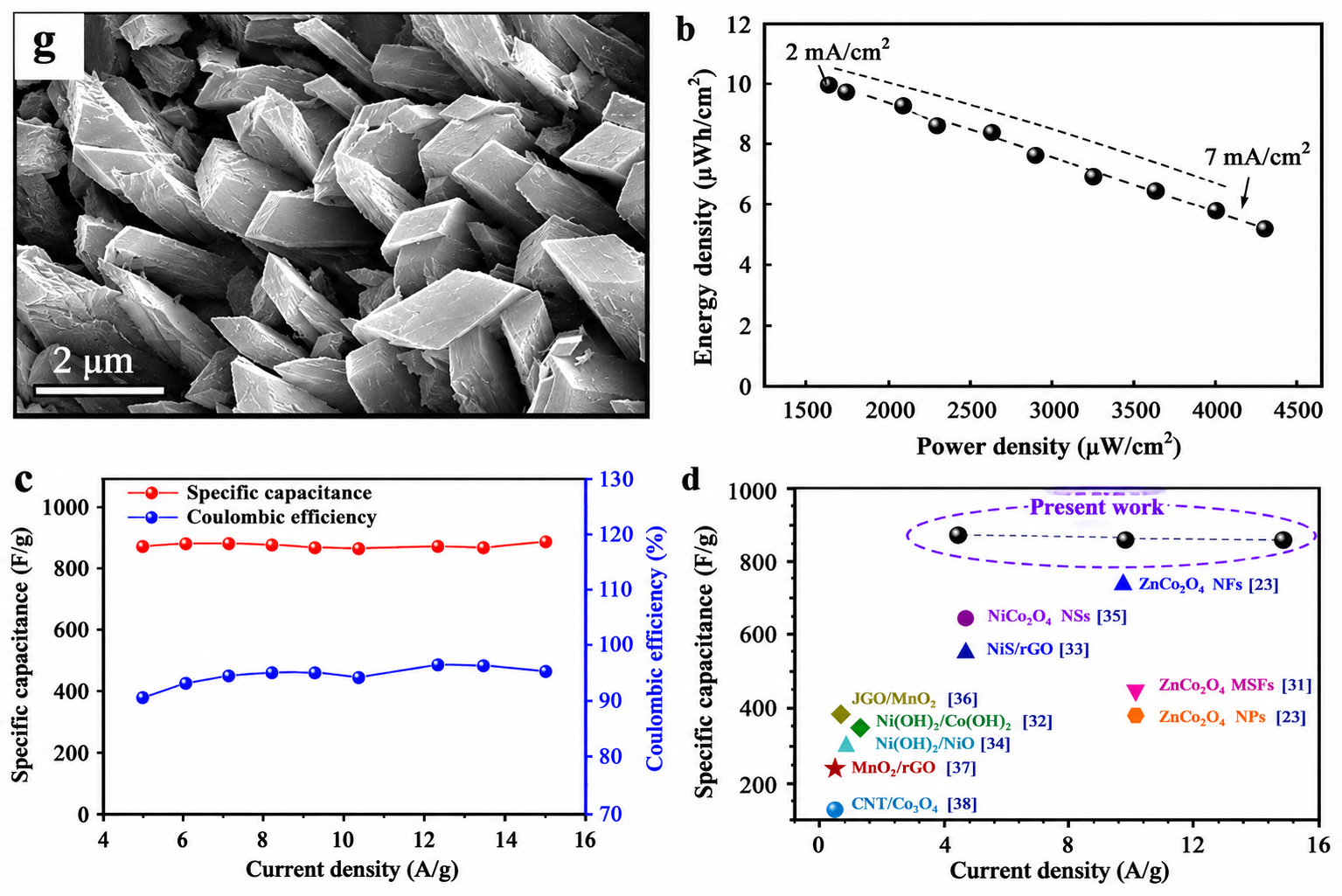
Synergistic effect in heterostructure of ZnCo2O4 and hydrogenated zinc oxide nanorods for high capacitive response
Figure: The as-grown ZnCo2O4 NRs on NiF. Variation of specific capacitance and Coulombic efficiency with respect to current densities (5–15 A g?1). (d) A comparison specific capacitance plot with respect to the current density of the ZnCo2O4/H : ZnO NRs electrode with those of the reported ZnCo2O4 nanostructure and hybrid nanostructure-based supercapacitor electrodes.
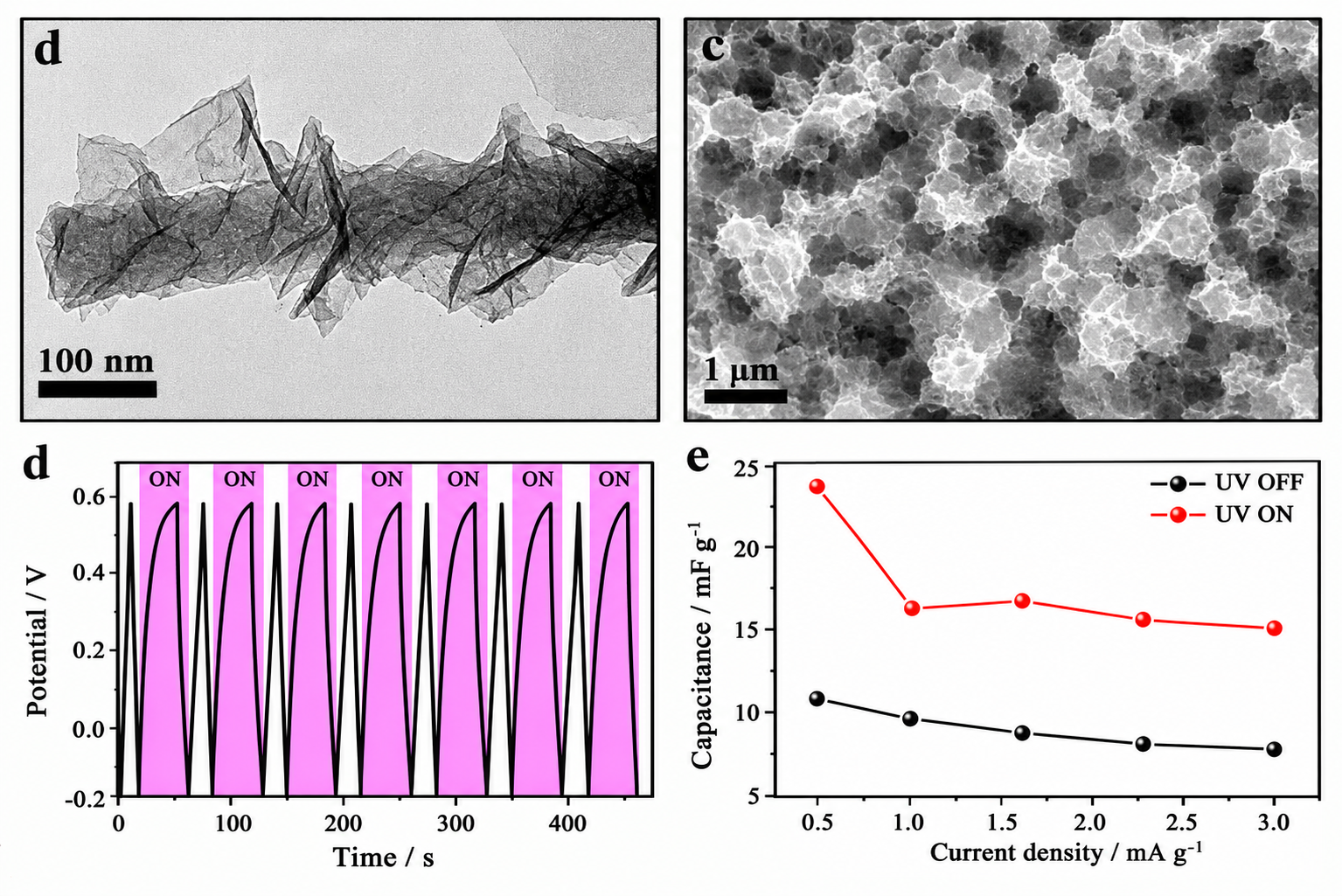
Photocharge-Enhanced Capacitive Response of a Supercapacitor
Figure: NiCo2O4-coated ZnO NRs. TEM image of NiCo2O4/ZnO NR. Cyclic charge–discharge analysis of the NiCo2O4/ZnO NRs//NiCo2O4/ZnO NRs SC at 1.2 mAg-1 current density in the absence and presence of UV irradiation. e) Capacitance as a function of current density of the NiCo2O4/ZnO NRs//NiCo2O4/ZnO NRs SC in both the absence and presence of UV irradiation.
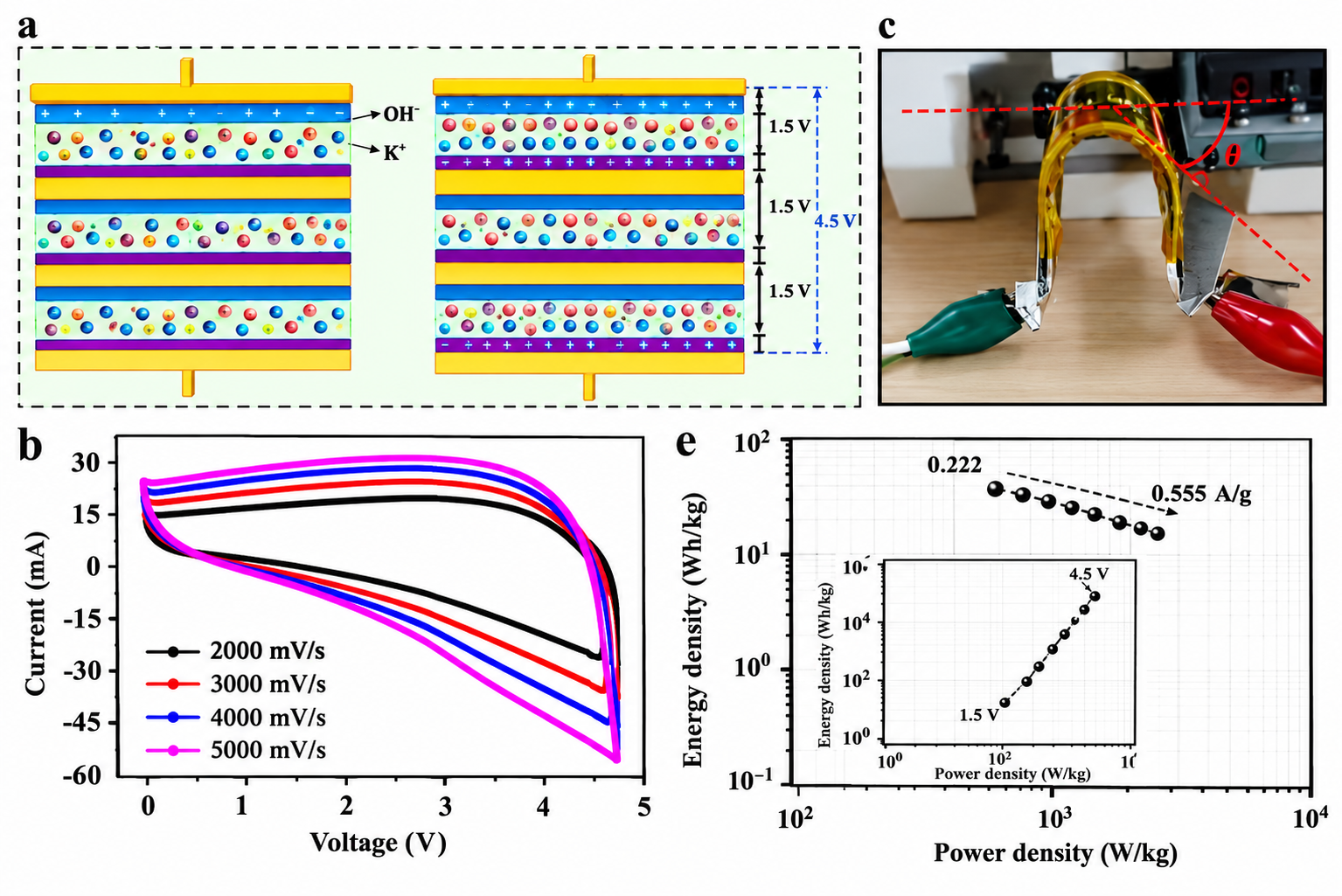
Internal asymmetric tandem supercapacitor for high working voltage along with superior rate performance
Figure: Schematic illustration of working mechanism of the ATSC: under the chemical equilibrium discharged and charged states. 2000 to 5000 mV/s, at a constant potential window of 4.5 V. Ragone plot of the ATSC at different current densities; inset depicts the Ragone plot at different potential windows (1.5?4.5 V).
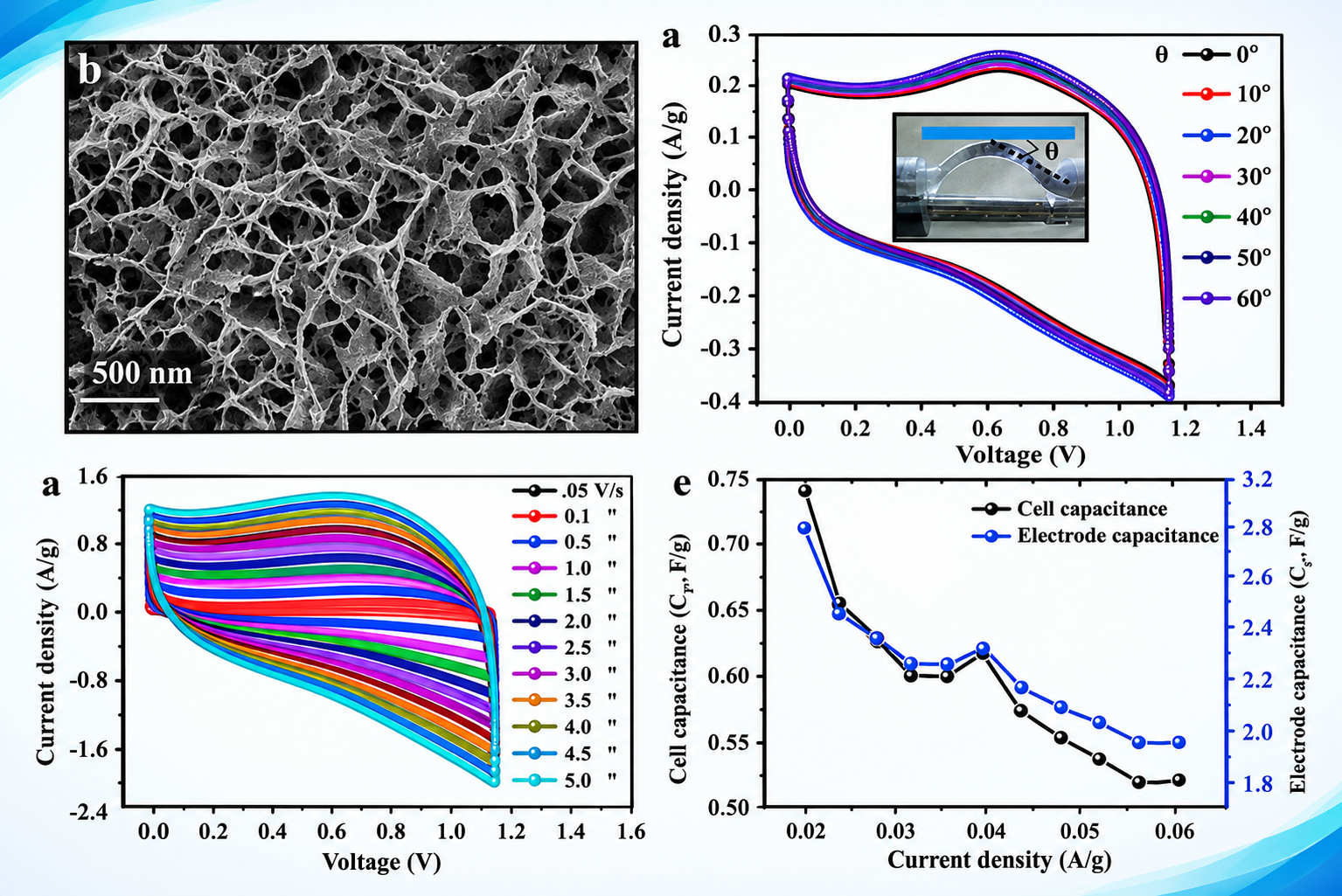
A flexible ternary oxide based solid-state super capacitor with excellent rate capability
Figure: Microstructure of VZnNiCo. CV plots curve at different bending angles of the VZnNiCo//VZnNiCo SC at a constant scan rate of 500 mV s-1. CV measurements of the VZnNiCo//VZnNiCo SC at (a) various scan rates ranging from 50 to 5000 mV s-1 and (b) different operating potential windows at a constant scan rate of 500 mV s-1. Plots of the specific cell capacitance and electrode capacitance of the VZnNiCo//VZnNiCo SC at various current densities.